By Cayden Antee, Synergy Strive TMS Treater (Silver Spring, MD)
Transcranial magnetic stimulation (TMS) yields remarkable results in the treatment of depression and OCD, while avoiding the pitfalls of alternative interventions and treatments. However, TMS is not without pitfalls of its own. While these disadvantages may be minimal (especially compared to those of medication, intensive therapies, etc.), those interested in TMS ought to be fully informed. Let’s start with the advantages.
There is never a one-size-fits-all treatment for any affliction, not to mention emotional ones. This said, TMS has been shown time and time again to attenuate—and in many cases eliminate—clinical depression. While the exact portion of TMS patients who see improvement depends on the provider, practice, and source of information, estimates range from 60-85%. In our practice, over 70% of our patients saw a clinically significant reduction in depression symptoms, and almost half saw their symptoms enter a healthy (i.e., non-depressed) range. These are conservative estimates; other measurement tools report 83% response and 62% “remission”.
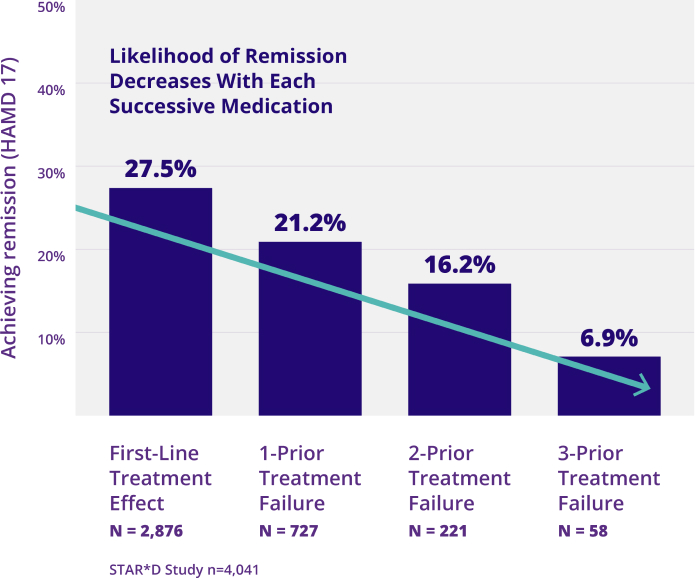
Additionally, TMS is currently available for those who have been dissatisfied with at least two rounds of antidepressant medication. A large NIMH study found that, after two failed medication trials, antidepressants lead to remission in only 16% of those who try again. With this in mind, the remission rate of TMS becomes all the more noteworthy.*
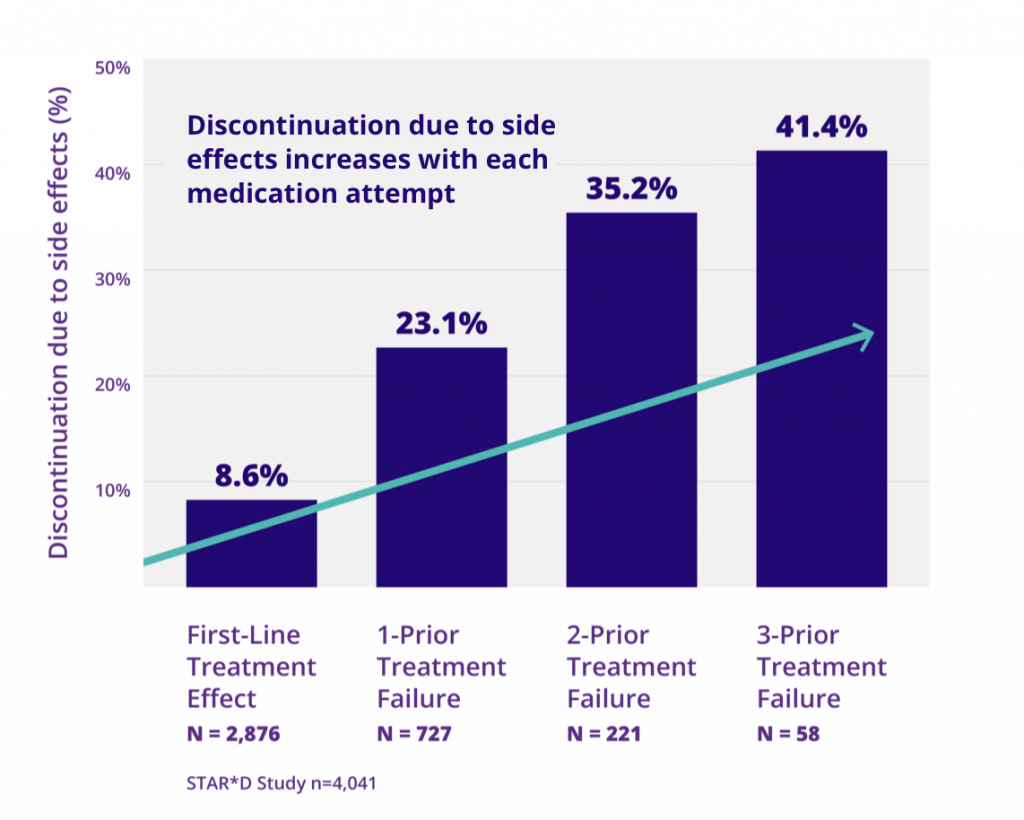
Aside from the effectiveness itself, perhaps the greatest advantage of TMS is the lack of side effects. Antidepressant medications have a whole host of adverse side effects which (by this point) are well known. Dysthymia (i.e., feeling like a zombie), weight fluctuations, sweating, sexual dysfunction, and poor appetite are all remarkably common side effects of medications (and they only become more common after 2+ failed rounds of antidepressants).
TMS, on the other hand, has none of these. The most significant side effects of TMS primarily occur in the first week as your brain and head get used to the sensation and stimulation. Side effects of TMS include mild fatigue and/or a headache post-treatment, as well as some discomfort at the magnet location while pulses are being delivered. None are long-lasting, and none significantly worsen or alter your mental health and daily functioning.
Understandably, many who are depressed seek out services and experiences that will make them happy. This happiness-seeking, however, isn’t always the best option–it’s essentially treating the symptom instead of the syndrome. Instead of directly stimulating/promoting happiness, TMS helps to equip patients with the tools, strength, and capacity to make themselves happy.
This is by virtue of the way TMS works. TMS doesn’t suppress the “sad” part of the brain, but rather activates and strengthens the area of your brain most associated with regulating emotions.
In turn, many of our patients first report the ability to self-regulate and self-motivate. It becomes easier to take care of the pile of laundry in the corner, easier to calm yourself down in traffic, and easier to improve your relationships with your loved ones. With time, these things lead to contentment, meaningful connections, and (indeed) happiness.
This approach provides the groundwork for longer-lasting mental well-being. Sure, more is asked of the patient, but that’s just the point (we’re not simply helping you, but helping you help yourself).
TMS therapy (with NeuroStar practices like ours) takes around seven weeks to complete. Compare this to the years, decades, and even lifetimes spent in therapy and on medication. While patients are often encouraged to remain in their ongoing treatments after TMS is done, the full course of TMS itself is rather brief.
At best, we’ve seen patients who’ve struggled with depression for decades be turned around in these seven weeks. At worst (i.e., if TMS isn’t effective for you), you’ve only “wasted” less than two months.
TMS (with NeuroStar practices) requires 36 sessions, usually Monday through Friday; budgeting for this time is often the largest barrier to access, especially among those with families, stringent work schedules, and long commutes.
This said, each session is only around 20 minutes long, so many can fit appointments into lunchbreaks, after work, etc.
Even if your copayment is low (e.g., $5.00 per session), 36 sessions add up. With an average copayment of around $15, most patients can expect to pay somewhere in the $500 range across the entirety of treatment.
Thankfully, many patients have copayments lower than this, and any payments that you do make contribute toward your deductible for the year. (If you’d like to learn more about insurance coverage of TMS, visit this page)
As mentioned before, there is no absolute guarantee that TMS therapy will be effective, at least not in all the ways we’d like it to be. While this is not a TMS-specific disadvantage (as such is the case for all endeavors), it must be acknowledged that only ~75% of our patients see much of an improvement.
TMS can be intimidating, especially at first. The idea of having a magnet repetitively stimulate your brain can be rather averse for many, and understandably so. This said, we have excellent, trained technicians and clinicians who go the extra mile to ensure you’re comfortable and familiar with what’s going on.
Similarly, the first portion of treatment can be physically uncomfortable for some patients. Some folks report soreness, pressure, or irritation where the magnet is resting on their head; when asked, the pain is typically around a 2-5 out of 10. This, like the intimidation, is largely confined to the first couple weeks–very few patients are uncomfortable throughout. Also, our technicians are always there to make adjustments to ensure you’re as comfortable as possible!
If you’re looking into TMS, we’d love to help. Fill out the contact portal on this page or give us a call and we’ll be in touch to discuss whether TMS is right for you! We offer insurance-covered NeuroStar TMS in Columbia, Towson, and Silver Spring, MD.
*Note: We use the term “remission” carefully, as we acknowledge that nobody is ever fully absent of struggle or sadness. Here, “remission” means that patients align with the diagnostic criteria satisfaction of non-clinical populations (indexed by a PHQ-9 score of 5 or below).