

By Cayden Antee, Synergy Strive TMS Technician (Silver Spring, MD)
Transcranial magnetic stimulation (TMS) is quite effective at reducing symptoms of depression and OCD. Put simply, this is done by strengthening the neural connections to and from the brain region most involved in the regulation of emotions. But how long do these neurological changes last? Is it possible that they’re just temporary?
It’s important to mention that the benefits of TMS can last forever, or at least indefinitely. But, like with all treatments, this isn’t the case for 100% of people.
Among those who respond to TMS therapy for depression, 74.8%-57.1% still see effects three months after treatment. After six months, 65%-40.3% are still responsive. After one year removed from treatment, 60.7%-32.6% are still seeing the direct benefits from TMS.
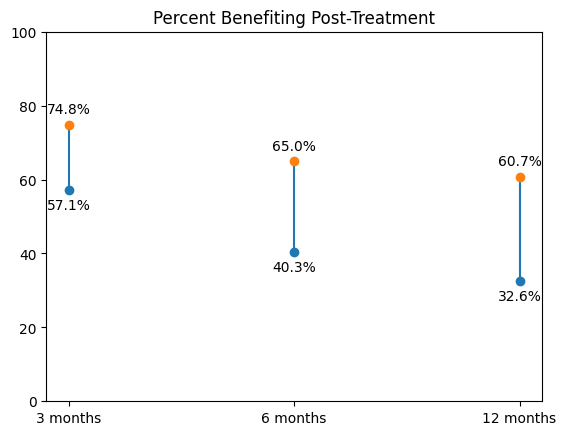
You can view the full meta-analysis here, published in Brain Stimulation.
TMS, much like cognitive-behavioral and other talk therapies, seeks to empower patients to help themselves–it is not so much an external force curing depression as it is an internal force helping you confront that which brings about depression.
By strengthening the dorsolateral prefrontal cortex, patients find themselves feeling more capable of taking on challenges big or small, more equipped to manage anxiety and negative emotions, and more poised to tackle relational stressors. This is to say, TMS does not directly reduce sadness, but rather strengthens your ability to reduce it yourself.
With this, the retention of TMS’s benefits lies largely in the hands of patients; what will you do with your newfound vitality? This is not to say that any relapse into depression is due to patient failure, though– life can grow even more complicated and challenging after TMS than it was before.
So why is this any better than antidepressants? We (and many other TMS professionals) believe that TMS is the optimal intervention for establishing a sustainable future– one not reliant on the temporary blocking of chemical receptors, but rather reliant on your strength, resilience, and proactivity. However, when a subset of patients struggles with the upkeep, the effects of TMS ostensibly disappear.
If you’re looking into TMS, we’d love to help. Fill out the contact portal on this page or give us a call and we’ll be in touch to discuss whether TMS is right for you! We offer insurance-covered NeuroStar TMS in Columbia, Towson, and Silver Spring, MD.

